Hardik's Notes · Opportunities
Open now: 5 contests for students (October 2026)
Five contests students in India can enter now, from a one-weekend NASA hackathon to a 10,000 dollar environment prize. Deadlines from 29 October.
What closes when?
- 29Oct 2026Conrad Challenge (stage 1)Ages 13 to 18
- 31Oct 2026IEEEXtremeCollege students
- 15Nov 2026NASA Space Apps ChallengeAll ages
- 14Jan 2027Diamond ChallengeAges 14 to 18
- 31Jan 2027The Earth PrizeBorn 2007 to 2014
Conrad Challenge
Invent something that fixes a real problem, then plan it as a business.
- Who
- Teams of 2 to 5, ages 13 to 18, from any country. One adult coach, 18 or older.
- You do
- Pick a topic: water, health, energy, cyber security, or air and space. Stage 1 is an online entry.
- You get
- Finalists go to a summit in April 2027. Last year's prizes included a paid trip and scholarships. This year's are not listed yet.
- Costs
- Stage 1 is free. Stage 2 is 499 US dollars a team. Financial aid is available.
- Closes
- Stage 1: 29 October 2026
IEEEXtreme
Solve hard coding problems with your team for 24 hours.
- Who
- College students who are IEEE student members, 18 or older. Teams of 1 to 3.
- You do
- Code for 24 hours. Some problems ban AI tools this year.
- You get
- 1st: a trip to an IEEE conference. 2nd and 3rd: cash. A certificate for every team that scores.
- Costs
- No entry fee, but you must be a paid IEEE student member.
- Closes
- Contest day is 31 October 2026, starting 5:30 am India time. Register before then.
NASA Space Apps Challenge
Build something with real NASA data in one weekend.
- Who
- All ages, anywhere. Teams of up to 6. Under 18? A parent or guardian registers you and stays with you.
- You do
- Pick one of NASA's challenges (out on 28 October). Join a local event, or the online one.
- You get
- A certificate for every project. Judges choose global winners.
- Costs
- Free.
- Closes
- The hackathon is 14 to 15 November 2026. Register by then.
Diamond Challenge
Turn an idea into a business or a social project, and pitch it.
- Who
- Teams of 2 to 4 high school students, ages 14 to 18, from any country. One adult advisor, 21 or older.
- You do
- Write 3 to 5 pages and make a 60-second video. The best teams then pitch. Finalists must go to the USA in April 2027.
- You get
- In each of two tracks: 12,000, 8,000 and 4,500 US dollars for the top three.
- Costs
- Free to enter.
- Closes
- 14 January 2027, 5 pm US Eastern time (3:30 am on 15 January in India).
The Earth Prize
Plan a project that helps the environment.
- Who
- School students born between 2007 and 2014, anywhere. Alone or in teams of up to 5. Any language.
- You do
- Register, then send in your plan.
- You get
- Seven regional winners get 10,000 US dollars each to build their project. The top 35 teams get a mentor.
- Costs
- Free at every stage.
- Closes
- Register by 10 January 2027. Send your plan by 31 January 2027, 4:30 pm India time.
How do I choose?
Pick one and finish it. One finished entry is worth more than three started.
Read the Costs row first. Two of these need money or a paid membership.
Teachers: Conrad and Diamond need an adult coach or advisor, and The Earth Prize encourages one. That adult can be you.
Sources
- Conrad Challenge: Activation Stage and Rules, Space Center Houston, read 2 October 2026
- IEEEXtreme 20.0 and Rules, IEEE, read 2 October 2026
- NASA Space Apps Challenge and Participant FAQs, read 2 October 2026
- Diamond Challenge: Competition and Participant toolkit, University of Delaware, read 2 October 2026
- The Earth Prize: Rules, The Earth Foundation, read 2 October 2026
Keep reading
Three more from the notebook.
22 September 2026
How to find the one thing that is broken
Your circuit will not light. Your code will not run. Here is the method engineers use, and it works on homework too.Read it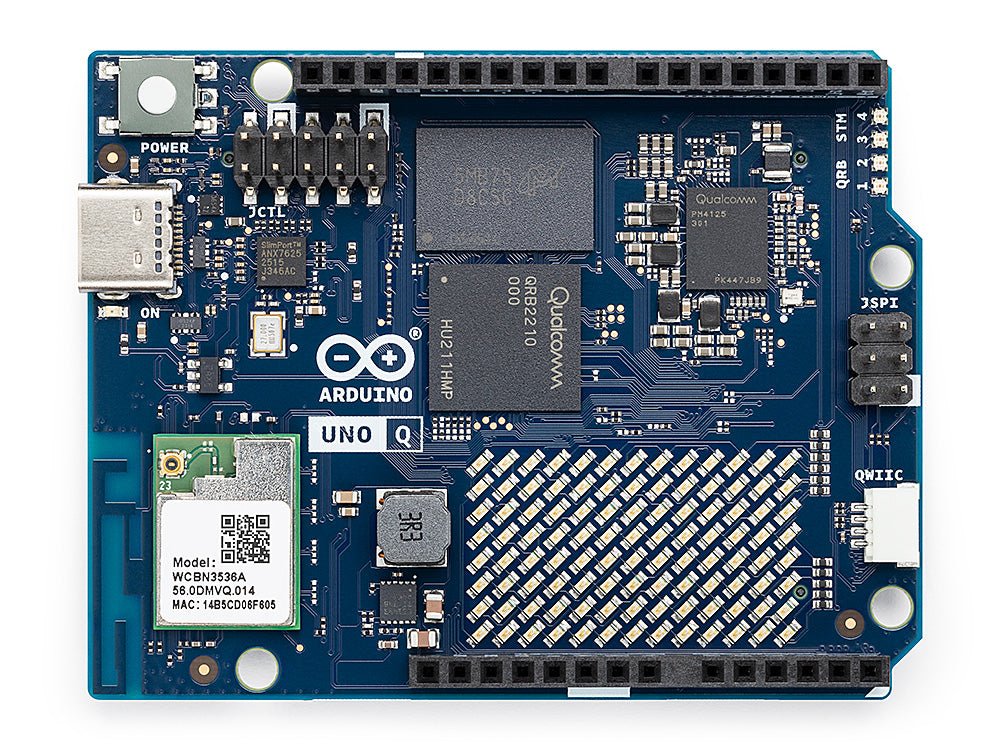 22 September 2026
The Arduino UNO Q, explained in five levels
The board you already know has a Linux computer in it now. Explained five times: to a child, a teen, a college student, a grad student, an expert.Read it4 September 2026
Think Inside the Box
The least useful advice you can give a teacher with thirty children, one room and forty minutes. The argument for working inside the limits instead.Read it
Beyond the notebook
This is what we do in schools.
A year-long programme for classes 6 to 12. Creativity, taught as a skill, inside the classroom you already have, led by your teachers.