The repair brief
Find something broken. Measure, model, print, fit. It won't fit first time.
Skills · 3D Printing
A design habit, not a machine in a corner: measure, model, print, fail, revise. Classes 6 to 12.
The origin
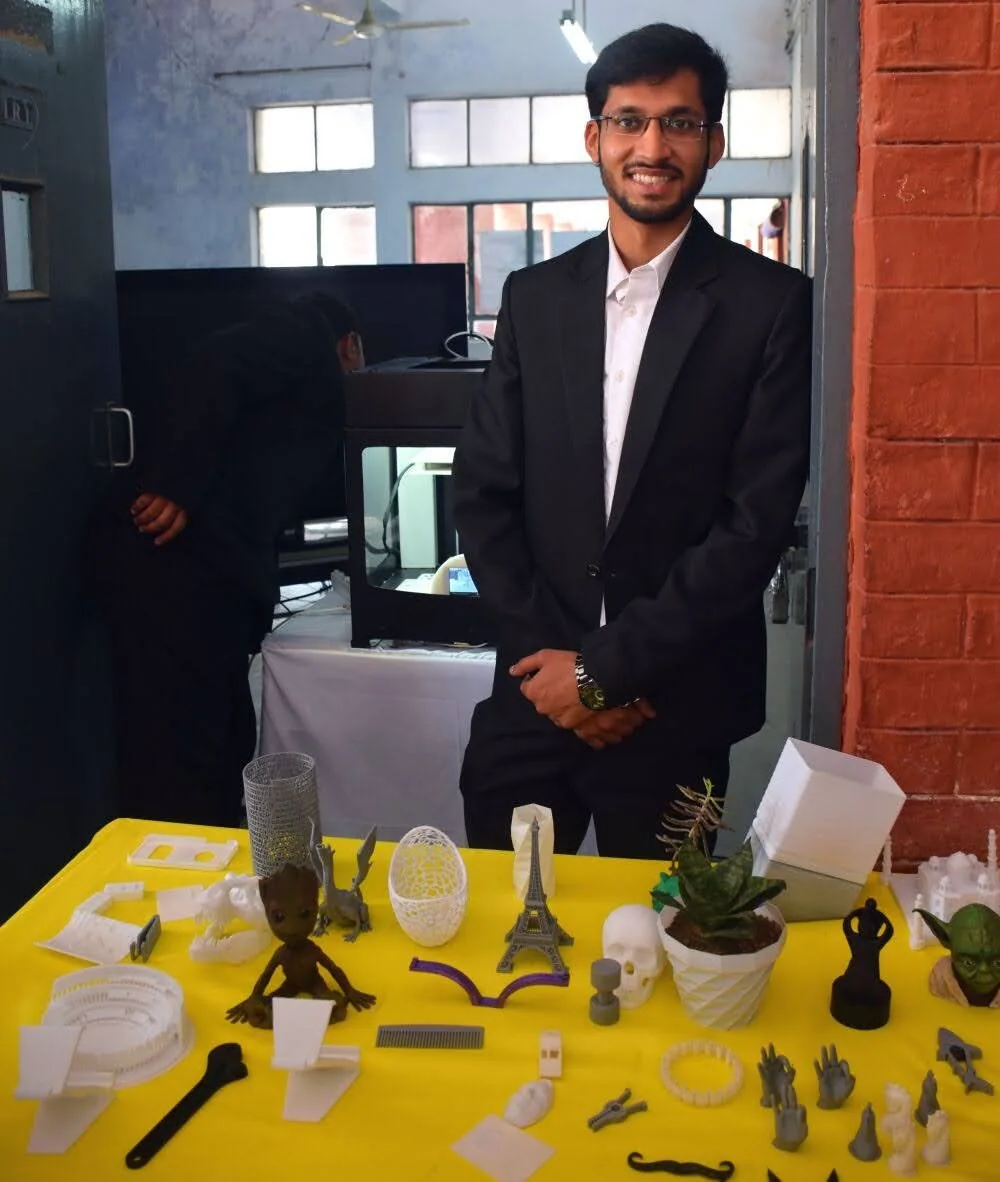
In 2016 our founder built affordable 3D printers for schools as a B.Tech project. The machines worked. The idea was wrong.
Setting up ATLs across northern India from 2019 to 2021, we watched well-equipped labs go quiet. Equipment is bought. Capability is built.
The work
Example briefs, not student work.
Find something broken. Measure, model, print, fit. It won't fit first time.
Interview a user, build what they need, test it with them, revise.
A bracket holding a set weight with the least material. Load it until it breaks.
Classes 6 to 12
measurement, CAD, the print-fail-revise loop. Kaushal Bodh projects under materials and machines (Circular Skill-81/2025, 28.10.2025); a user-need brief leans toward human services. A Composite Skill Lab "may utilize" it.
tolerances, wall thickness, print orientation, strength against material and time.
batch runs, cost per part, and when 3D printing is the wrong answer.
Classes 6 to 12
A printing lab runs on a teacher unafraid of the machine: first-layer literacy, the five slicer settings that matter, maintenance without a technician.
One printer, thirty students: modelling and testing happen off the machine, so it never bottlenecks learning.
Equipment
Many schools already own an idle printer. We would rather revive it. CBSE's CSL equipment list is explicitly "suggestive", adoptable per readiness (Circular Skill-13/2026, 20.03.2026).
The skills map
Questions
The most common situation we walk into. Most school labs are well-built and underused. A service pass and a confident teacher usually revive it.
On a call, not with a product link. Having built school printers by hand: reliable and boring beats impressive.
No. Short courses run via Skill Hubs under PMKVY 4.0, aligned with national skilling priorities. CBSE's emphasis is learning from the doing, not the end product.
Book a workshop
How a school and Hankernest find out whether 3D Printing fits before anyone commits to a year. Inside your timetable, with your teachers and your students, on what you already own.
Your class builds
One small part measured with a caliper and modelled, with a print started before the bell so the class sees the first layer go down.
And learns. Why the printer is the easy part.
One brief from this page, run as a lesson with one of your classes, on what the school already owns.
The same kit in their hands. Where it fails, what students ask, how the period is paced.
Where the periods come from, which classes, and which forms of work the projects would cover.
What we would run, what you already have, what you would buy directly, and a cost band. No obligation.
You pick the class and the period. We bring what the session needs.
Or just talk to us. info@hankernest.com, or +91-7000403607 on call and WhatsApp during office hours.