Teardown, name, rebuild
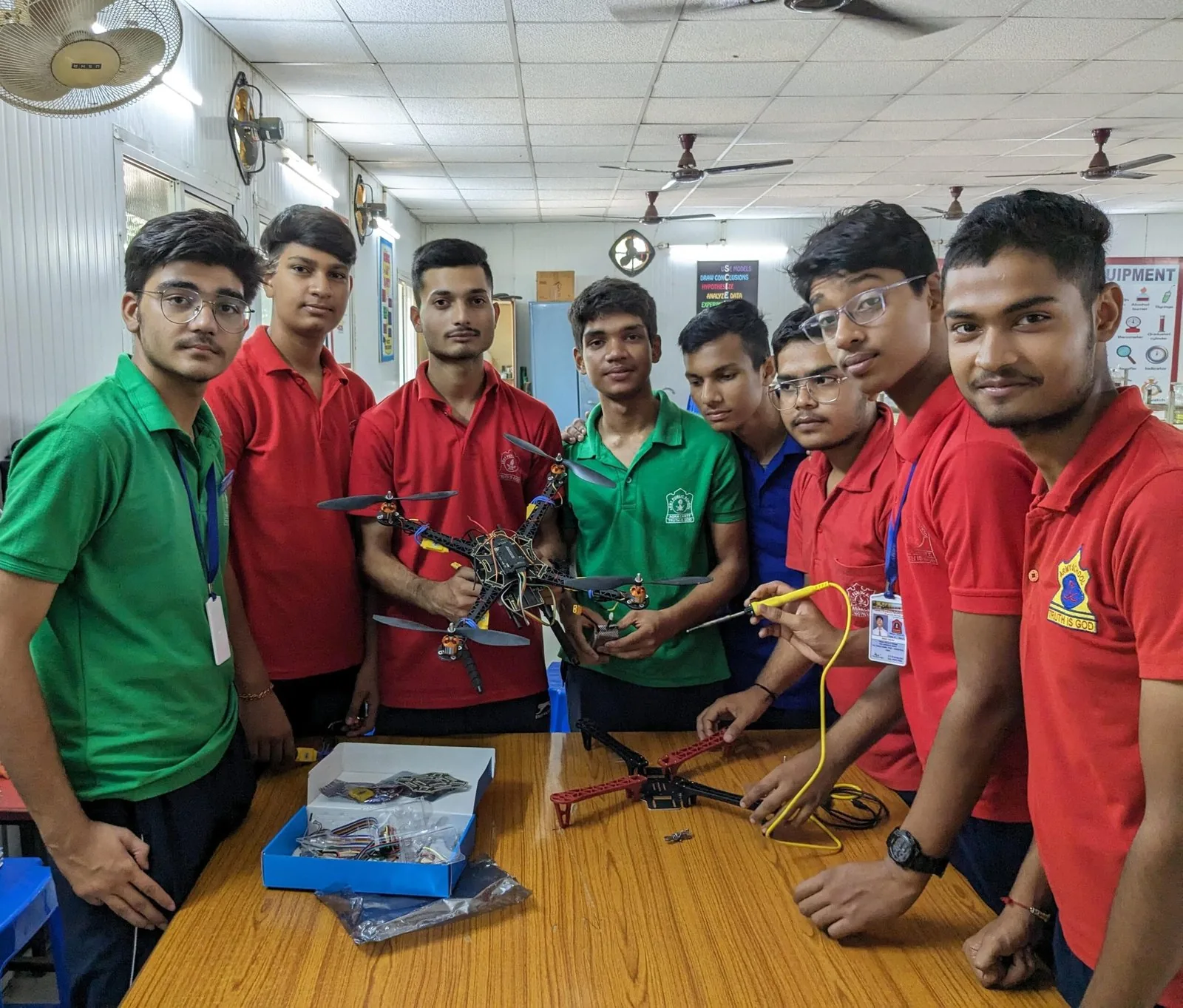
Strip it to frame, motors, props, controller. Rebuild, then hover.
Skills · Drones
Nano-class aircraft, flown indoors, with checklists and flight logs. The discipline is the lesson. Classes 6 to 12.
The fine print, first
We fly nano-class drones (under 250 grams), the lightest category in the Drone Rules, 2021. Our protocol is stricter than required, on purpose.
The work
Example briefs, not student work.
Strip it to frame, motors, props, controller. Rebuild, then hover.
One course, ten runs, every run logged. What changed: drone or pilot?
Plan a survey on paper: path, battery budget, camera height.
Classes 6 to 12
Fit before ambition.
flight basics, teardown, logging. Kaushal Bodh projects under materials and machines (Circular Skill-81/2025, 28.10.2025), assessed on viva, activity book, portfolio, teacher observation. A Composite Skill Lab "may utilize" it.
flight planning, maintenance, repair, weight against battery.
flight controllers, sensor payloads, the limits of autonomy.
Classes 6 to 12
A drone programme survives on teacher confidence, not aircraft. We train:
Equipment
You do not need a fleet. Three or four nano trainers and a charging routine run a programme. CBSE's CSL equipment list is explicitly "suggestive", adoptable per readiness (Circular Skill-13/2026, 20.03.2026).
The skills map
Questions
We fly nano-class precisely because it carries the lightest obligations. Rules evolve, so we brief your leadership before the first flight.
No. Drone short courses run in CBSE schools via Skill Hubs under PMKVY 4.0, aligned with national skilling priorities. In your timetable it is lab and project work.
No. Equipment comes after pedagogy. CBSE's CSL list is suggestive, not mandated.
Book a workshop
How a school and Hankernest find out whether Drones fits before anyone commits to a year. Inside your timetable, with your teachers and your students, on what you already own.
Your class builds
A pre-flight checklist and one logged hover, indoors, with one pilot and one spotter.
And learns. That the discipline is the lesson.
One brief from this page, run as a lesson with one of your classes, on what the school already owns.
The same kit in their hands. Where it fails, what students ask, how the period is paced.
Where the periods come from, which classes, and which forms of work the projects would cover.
What we would run, what you already have, what you would buy directly, and a cost band. No obligation.
You pick the class and the period. We bring what the session needs.
Or just talk to us. info@hankernest.com, or +91-7000403607 on call and WhatsApp during office hours.