Our approach
How we work, and why.
Most school innovation programmes go quiet within six months. We build for Year Three instead.
- Founded
- 2017
- Led by
- Educators
- Certified
- ISO 9001:2015
- Classroom teaching
- 10+ years
Think Inside the Box - Try, Fail, Fix, Learn - Educators before equipment - Fit before ambition - Hardware is the reward - Creativity as a skill - Kept while it happens
The pattern
What we've noticed
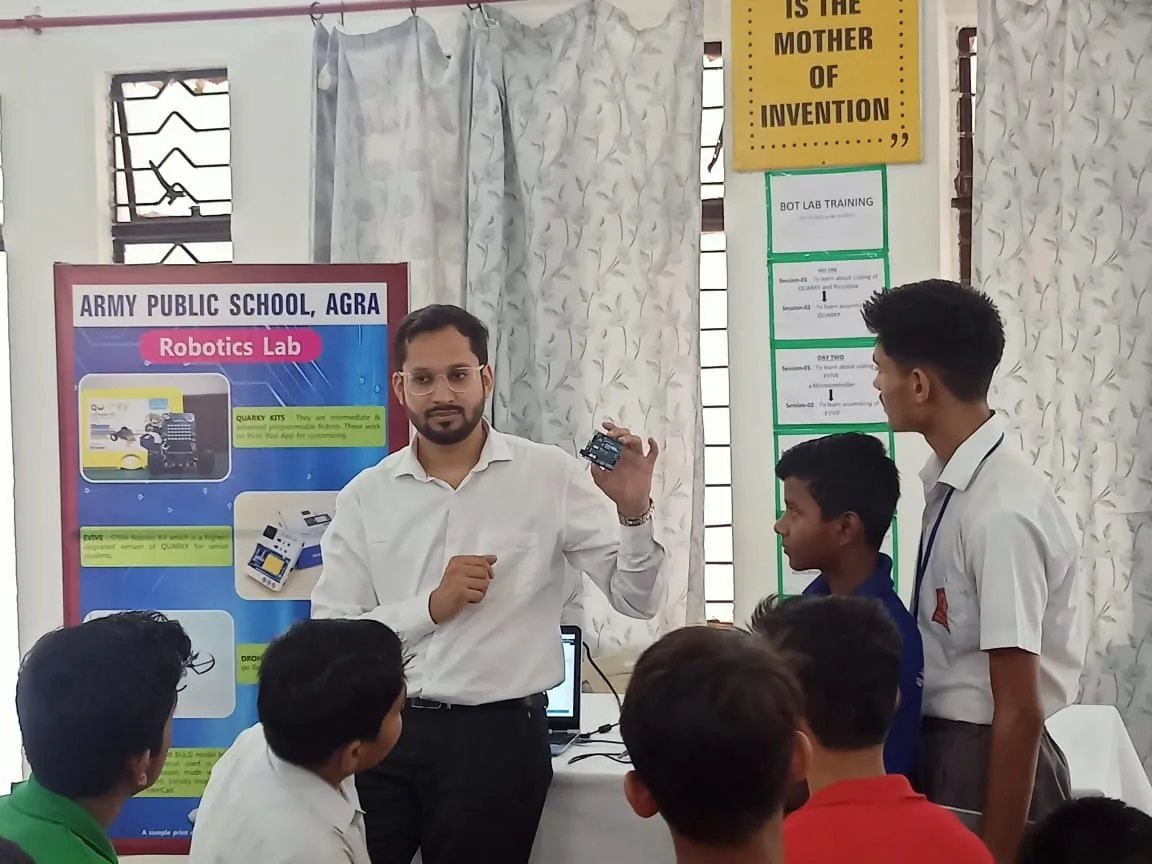
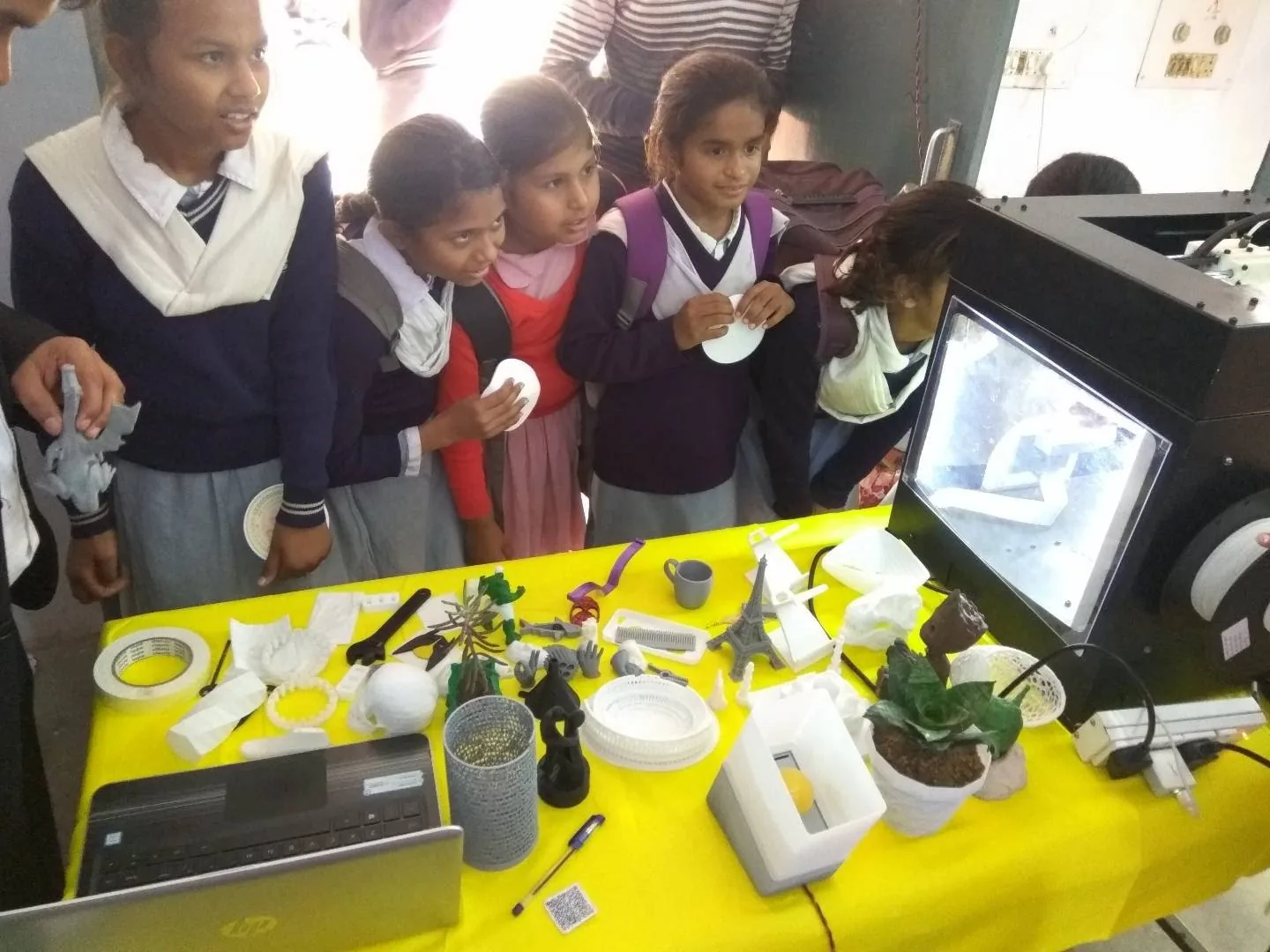
We set up Atal Tinkering Labs with the Atal Innovation Mission (2019–21). Within six months too many had gone quiet.
Most school labs are well-built and underused. The room is the easy part. The running is hard: a curriculum that fits, a teacher who can hold the sessions, a documentation habit.
Equipment is bought. Capability is built.
Everything below answers it.
Three principles
How we work.
Educators before equipment.
Pedagogy first. Tools earn their place when they add value. When we say an inexpensive board will do, it will.
Fit before ambition.
Designed for the timetable you already have. A programme that assumes a different school will not survive exam season.
Implementation before expansion.
Year-long structured engagement over one-off events. A workshop produces photographs; a year produces habits.
Our classroom programme
Think Inside
the Box™
Everyone says think outside the box. We think the box is the point. The box is a classroom, a timetable, a budget, thirty children and one teacher. Creativity is not what escapes those limits. It is what you do inside them.
How the programme runsPractitioners first
The research grounding
We are practitioners first, but the practice is not improvised.
Doctoral research at Dayalbagh Educational Institute.
Cognitive markers of creative thinking, our founder's PhD.
The maker-education work of MIT and Stanford communities.
Why hands-on work changes how students think.
Harvard Project Zero.
How thinking develops, and how it is made visible.
David Cropley's creativity research.
Creativity as a definable, teachable capability.
This is why we say creativity, treated as a skill schools can actually build.
The year
The year rhythm
School programmes fail when they ignore the shape of the school year.
- NOV to JAN
Plan the year ahead
Audit, meet the teachers, and design next session while this one is still running. Nothing is decided in April.
- FEB to MAR
Exams. We stay out.
No sessions, no visits, no asks. The timetable belongs to the exams.
- APR to JUL
Launch and embed
The session opens with teachers trained and sessions running, closely coached.
- AUG to DEC
Steady-state
Teachers lead, we coach. Projects documented as they happen.
- JAN
Public demos and review
The Kaushal Mela, then an honest review, while next year is already being planned.
February and March are deliberately empty. Come mid-year and we start where you are.
Four steps
How an engagement runs
Four steps, in order, without skipping:
Audit.
Your space, timetable, teachers, infrastructure. An honest written picture, including what you do not need us for.
Curriculum co-design.
Fitted to your sections and periods, with you, not for you.
Teacher training.
Before launch, then coaching through the early terms.
Steady-state and showcase.
Teachers lead. We coach. The year ends with a showing your school runs.
Honest answers
What principals ask us.
The easiest thing is to talk.
Fifteen minutes. Bring the situation: the mandate, the lab, the timetable. We tell you what we would look at first. If we are not a fit, we say so.
Prefer WhatsApp? +91-7000403607, office hours.
Do your staff run the sessions, or do our teachers?
Yours. We train before launch and coach through the early terms; by August to December they lead. What we need is protected time on the timetable.
How will we know whether it's working?
We will not promise outcomes. We point to signals anyone can check: periods held, activity books filled as work happens, portfolios accumulating, a showcase that happened. The January review puts it in writing.
What does an engagement cost?
Scoped per school: sections, infrastructure, teacher capacity. A clear band after a 15-minute call, and a fixed scope before you commit.
Talk to us
The easiest thing is to talk.
Bring the situation: the mandate, the lab, the timetable. If we are not a fit, we say so.
info@hankernest.com
+91-7000403607, call or WhatsApp, office hours
Dayalbagh, Agra. Visits by appointment.