A quiz game for a younger class
Playtested with the juniors, revised when they're bored.
Skills · Coding
Small programs that solve problems students can name, this term. Classes 3 to 12.
The pattern
Coding classes drift toward recitation: programs copied from the board, notebook signed. What we add is the project framework, the portfolio habit, and facilitation.
The work
A year in three stages: think in steps, a first text language, then build and ship at the Kaushal Mela.
Playtested with the juniors, revised when they're bored.
Count library issues or canteen queues, chart them, present what they say.
Branching stories teach conditions and state.
Classes 3 to 12
CBSE's "Computational Thinking & AI" curriculum covers classes 3 to 8 from 2026-27. Sequences, conditions, loops.
110 hours a year, three projects across three forms of work (Circular Skill-81/2025). Coding serves all three.
ground for AI (subject code 417), an established skill subject. First text language.
portfolio-grade work. The CSL serves classes 6 to 12: one 600 sq ft lab, or two 400 sq ft (6 to 10, 11 to 12), per Circular Skill-75/2024.
Classes 3 to 12
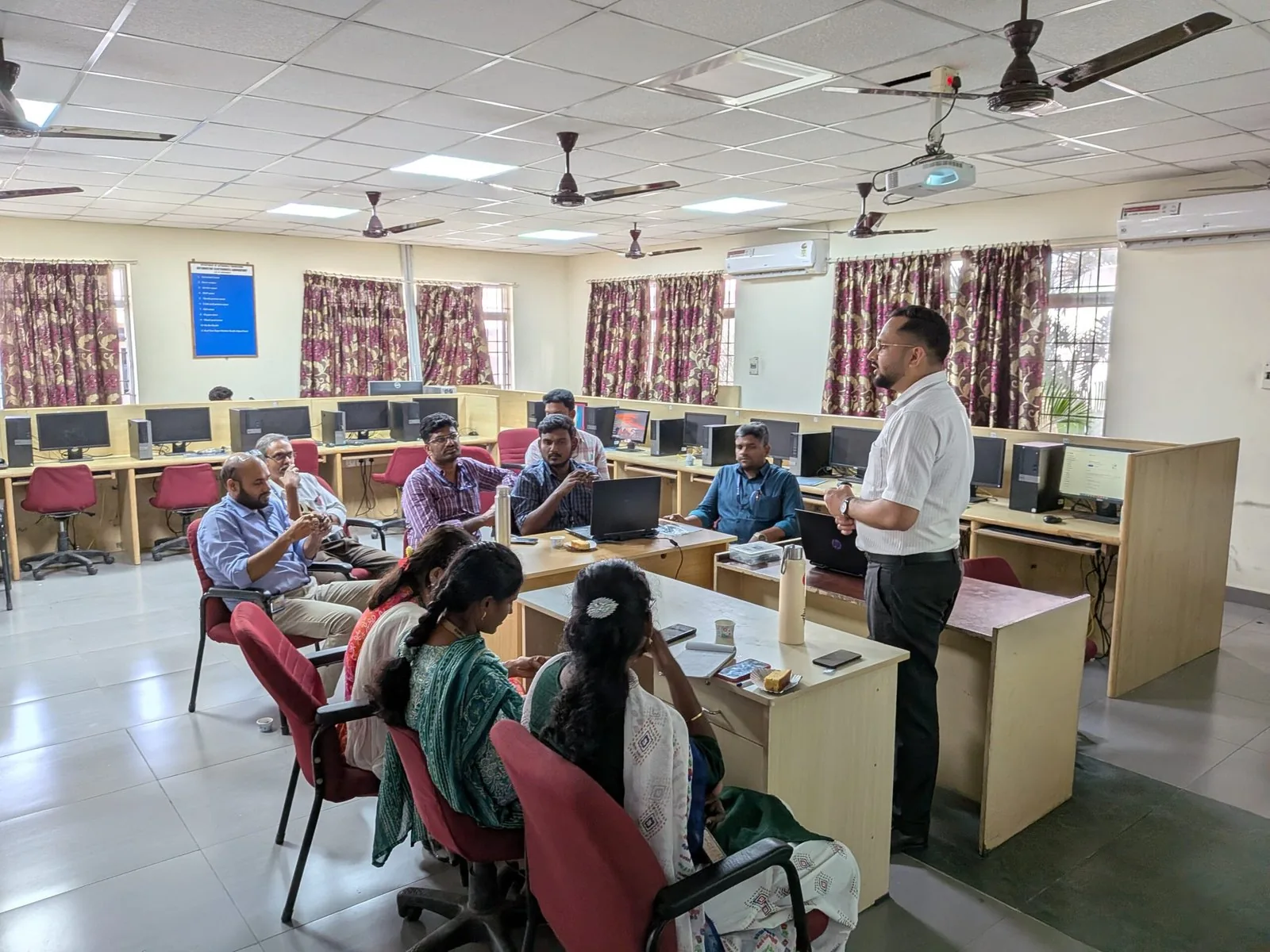
Computer teachers know the content. What goes missing is facilitation: twenty projects in twenty states, and not fixing the bug a student nearly found.
By August to December they lead and we coach. The measure is whether it still runs in Year Three, when nobody is watching.
Equipment
The least equipment-hungry skill we run: it starts on the computer lab you already have. CBSE's CSL equipment list is explicitly "suggestive", adoptable per readiness (Circular Skill-13/2026, 20.03.2026).
The skills map
Questions
Blocks first, Python after. The language matters least: decomposing a problem and reading an error message transfer anywhere. Blocks, so typing never blocks logic.
The lab satisfies it; a skill is what happens inside. Every CBSE-affiliated school must establish a CSL: immediately for fresh affiliations, by 22 August 2027 for existing schools (Skill-75/2024, deadline in Skill-13/2026). Schools with one "may utilize" it.
Usually no. We audit first; browser tools keep old machines useful.
Book a workshop
How a school and Hankernest find out whether Coding fits before anyone commits to a year. Inside your timetable, with your teachers and your students, on what you already own.
Your class builds
A five-question quiz game in blocks, built to be played by a younger class.
And learns. Sequences, conditions and loops, in a program they can name.
One brief from this page, run as a lesson with one of your classes, on what the school already owns.
The same kit in their hands. Where it fails, what students ask, how the period is paced.
Where the periods come from, which classes, and which forms of work the projects would cover.
What we would run, what you already have, what you would buy directly, and a cost band. No obligation.
You pick the class and the period. We bring what the session needs.
Or just talk to us. info@hankernest.com, or +91-7000403607 on call and WhatsApp during office hours.