The school programme · classes 6 to 12 · one year
Think Inside
the Box™
A year-long programme for classes 6 to 12. Creativity, taught as a skill, in the lab and the timetable your school already has, led by your teachers.
Think Inside the Box - Try, Fail, Fix, Learn - Educators before equipment - Fit before ambition - Hardware is the reward - Creativity as a skill - Kept while it happens
Creative thinking, taught inside the school you already have.
Everyone says think outside the box. We think the box is the point. The box is a classroom, a timetable, a budget, thirty children and one teacher. Creativity is not what escapes those limits. It is what you do inside them.
Whatever lab you have, the work that happens inside it matters more than the lab itself.
What schools face
Five ways this usually fails.
Schools rarely struggle with intent. They struggle with execution inside real constraints: time, teachers, timetables, and marks that cannot slip.
- Infrastructure bought without an academic plan for using it.
- Short-term technical instructors with little classroom experience.
- Teachers expected to take over, without the confidence or the structure to.
- Programmes that lose momentum after the first term's enthusiasm.
- Nothing that shows continuity or outcomes when an inspection comes.
The programme is built around those five, which is why it starts with teachers and a timetable rather than a purchase order.
What you get
What you get.
Four things a school cannot buy in a crate.
Curriculum
A 110-hour, NCERT-aligned annual curriculum, mapped to the three forms of work. Designed for the timetable you already have.
Teacher capacity
Your teachers run this, not our staff. Trained before launch, coached through the year.
The record
Frameworks and routines that build activity books and portfolios as the work happens.
Mela and showcase
The year-end Kaushal Mela, designed with you and run by your school.
Classes 6 to 12. Classes 6 to 8 first and properly, where Kaushal Bodh makes it mandatory, then upward.
Where it runs
Where it runs.
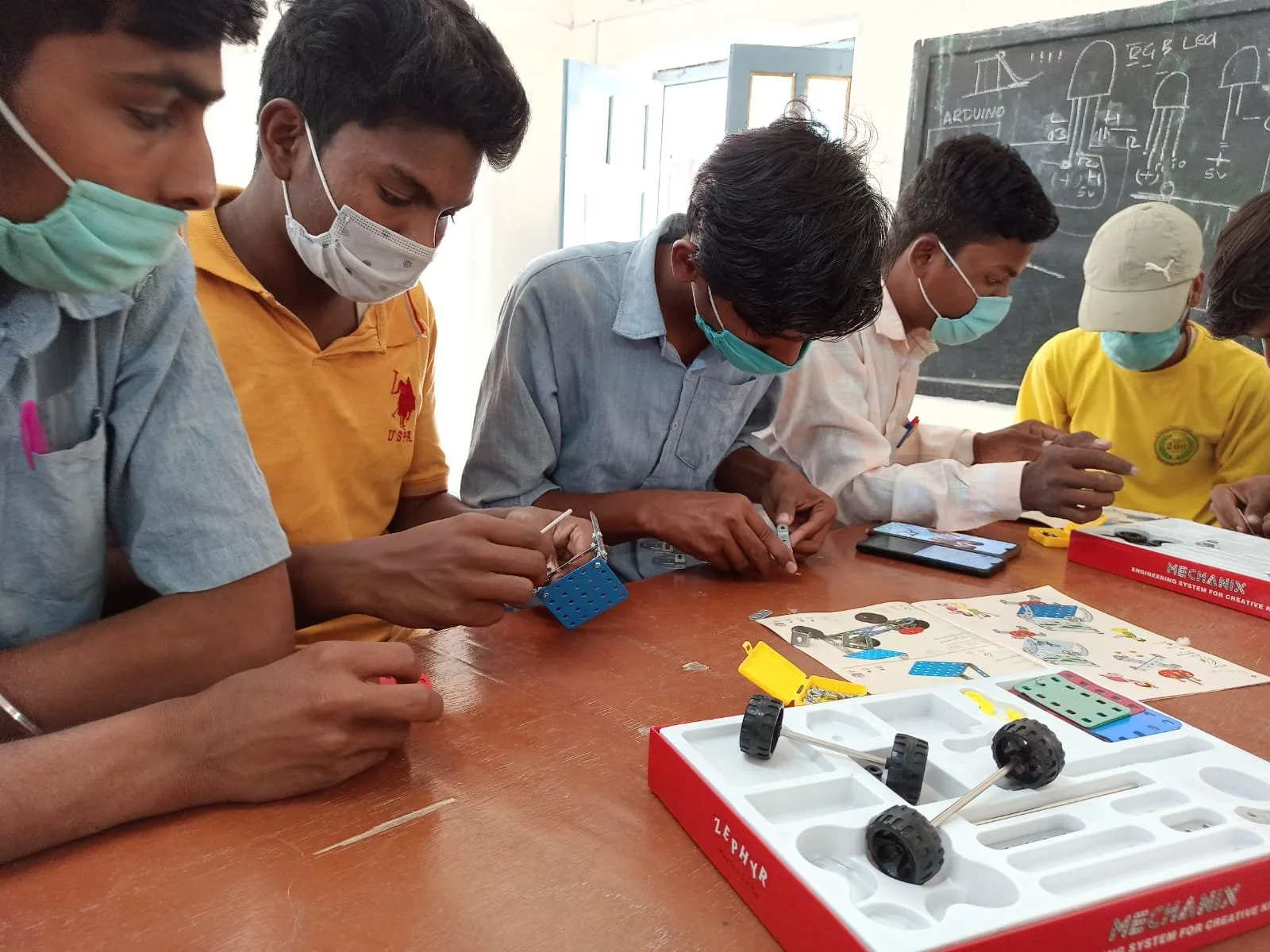
In the two rooms CBSE and AIM ask schools to have, inside the timetable you already keep, reaching every child in the grade and not only the club.
The year
How the year runs.
Term by term, with February and March left alone.
Plan the year ahead
Audit, meet the teachers, and design next session while this one is still running. Nothing is decided in April.
Exams. We stay out.
No sessions, no visits, no asks. The timetable belongs to the exams.
Launch and embed
The session opens with teachers trained and sessions running, closely coached.
Steady-state
Teachers lead, we coach. Projects documented as they happen.
Public demos and review
The Kaushal Mela, then an honest review, while next year is already being planned.
Five phases, and February and March are deliberately empty. Come mid-year and we start where you are.
Circular Skill-81/2025
What Kaushal Bodh asks of classes 6 to 8.
110 hours a year, roughly 160 periods, two consecutive periods twice a week. Three projects per class per year, one from each form of work. Nine projects per student by the end of class 8. CBSE's emphasis is learning from the doing, not the end product.
- Work with life forms
- Work with materials and machines
- Work on providing human services
Suggested weightages
| Written | 10% |
| Viva | 30% |
| Activity Book | 30% |
| Portfolio | 10% |
| Teacher Observation | 20% |
Activity book and portfolio together are 40%: the documented process, kept as the work happens.
Which track is yours
Three tracks. Start where your school is.
One programme runs all three. Most schools begin with classes 6 to 8, because that is the part CBSE requires, and add the others as they are ready.
The mandate track
Kaushal Bodh, mandatory from session 2025-26. Three projects a year, one per form of work, 110 hours, the Mela. This is where the year starts, and it is the only part CBSE requires.
- How it fits
- Two consecutive periods twice a week, inside the timetable. Nine projects per student by the end of class 8.
- Who facilitates
- Your teachers, trained before launch and coached through the year.
- What the school provides
- The periods, a room to work in, and one coordinating teacher.
The skill-subject track
AI, subject code 417, is an established skill subject for classes 9 and 10. The lab is where its project work happens, and the record carries on from class 8.
- How it fits
- The subject's own project periods. Nothing is added to the timetable.
- Who facilitates
- Your computer science or AI teacher, with our training.
- What the school provides
- The lab periods and the computers the subject already uses.
The innovation track
The Composite Skill Lab serves classes 6 to 12 and the ATL is for schools running 6 to 12. Senior students work in teams on a brief with a real user, and show it in public. SciHi 2026 is that track at national scale.
- How it fits
- Team time in the lab across a term, ending at a showcase or a hackathon.
- Who facilitates
- A mentor teacher, coached by us; the students lead.
- What the school provides
- The lab, protected team time, and a date to show the work.
Skills
The skills.
Sixteen, in three forms of work. A school picks the ones that fit its room and its teachers.
A skill is a toolset. A form of work is what the project is for. Most schools run two or three, so classes 6 to 8 cover all three forms. Eight have run in classrooms for years; eight are new this session, and each page says which it is.
Work with life forms
Work with materials and machines
Work on providing human services
Whichever form the brief points at
No skill needs a purchase before a conversation: we audit the room the school already has before we advise on anything.
Who teaches it
Your teachers do.
Four steps, in order, without skipping.
- Audit. Your space, timetable, teachers and existing lab. An honest written picture.
- Curriculum co-design. Fitted to your sections and periods. With you, not for you.
- Teacher training. Before launch, then coaching through the early terms.
- Steady-state and showcase. Teachers lead. We coach. The year ends with a Mela your school runs itself.
We optimise for one thing: whether the work is still happening in your school in Year Three, when nobody is watching.
CSL training comes with the programme. It is not sold on its own: it is how your teachers come to run this. Teachers who want to go deeper on their own take the ATL Course.
The ATL Course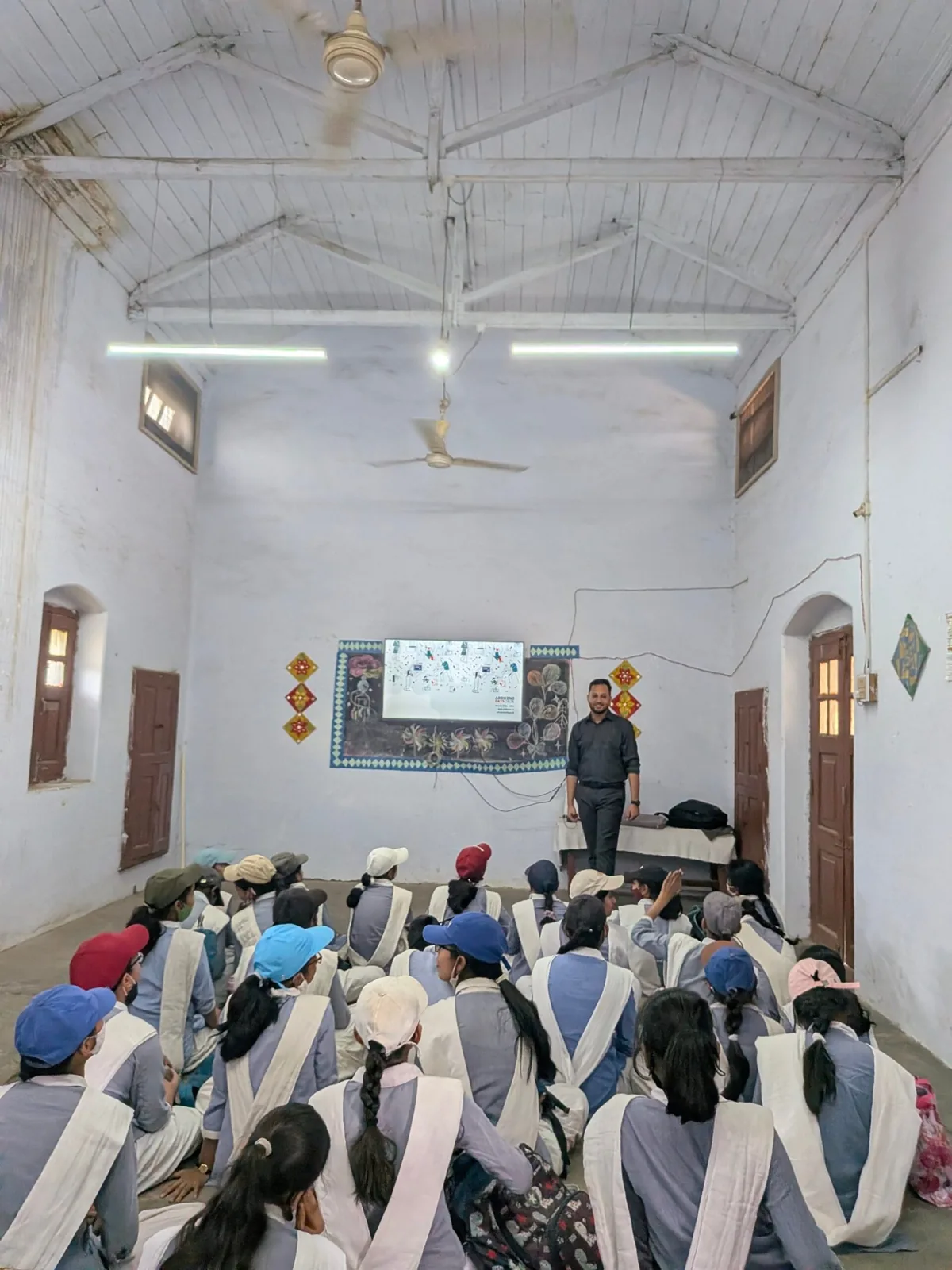
The record
How it is tracked.
The record, kept as the work happens.
The year accumulates as it happens: projects, process journals, photographs, coverage against the three forms of work, and the marks behind the weightages, held per student from class 6 to class 8. Kept as the work happens, rather than assembled the week before an inspection.
Hatch, the Arduino editor we build, keeps each student's lesson progress, and it follows them from machine to machine.
What it costs.
Scoped per school, after the audit.
Sections, existing infrastructure, teacher capacity. A clear band after a 15-minute call, and a fixed scope before you commit.
Honest answers
- Which room does it run in?
- The Composite Skill Lab, the Atal Tinkering Lab, or the room your school has today. We audit that room first and advise after, so trained teachers and a running curriculum are in place before anything is bought.
- Do your staff run the sessions, or do our teachers?
- Yours. We train before launch and coach through the early terms; by August to December they lead. What we need is protected time on the timetable.
- How will we know whether it is working?
- We will not promise outcomes. We point to signals anyone can check: periods held, activity books filled as work happens, portfolios accumulating, a showcase that happened.
- What does it cost?
- Scoped per school after the audit. A band after a 15-minute call.
Talk to us
The easiest thing is to talk.
Fifteen minutes. Bring the situation: the mandate, the lab, the timetable. If we are not a fit, we say so.
- A pilot in one class
- An inspection readiness review
- A programme fitment call
info@hankernest.com
+91-7000403607, call or WhatsApp, office hours
Dayalbagh, Agra. Visits by appointment.