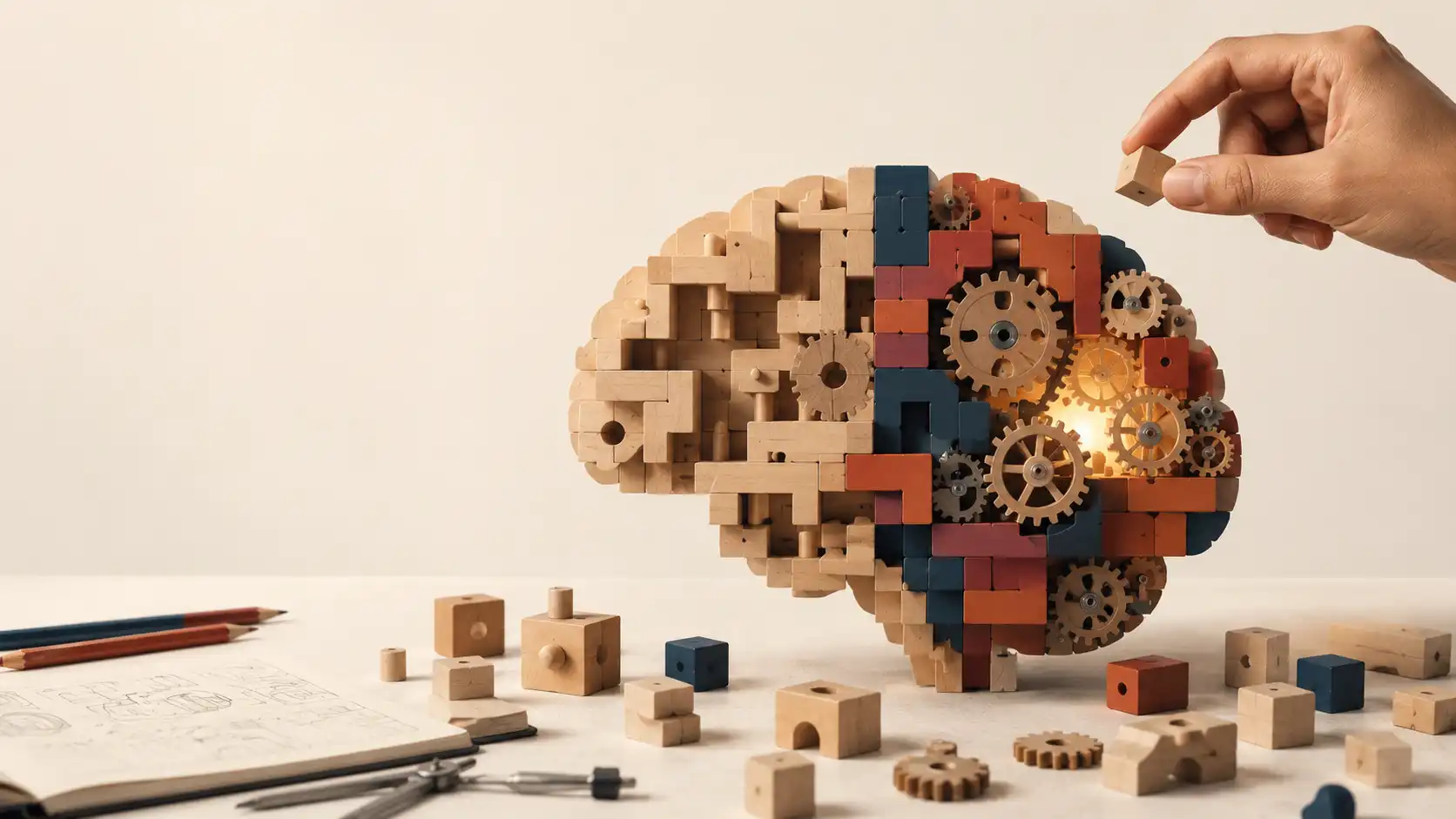
5 Questions That Turn Any Lesson Into a Thinking Lesson

Most classroom questions aren’t really questions Sit at the back of an average classroom, school or college, and count the questions the teacher asks. There will be a lot of them. But listen closely and you will notice something: almost none of them are actually asking students to think. “What is the capital of France?” “What year did this happen?” “Is everyone following?” “What’s the formula for the area of a circle?” These are not bad questions. But they are recall questions. They check whether a fact is sitting in memory, ready to be retrieved. The student who answers has demonstrated storage, not thinking. And a classroom built entirely on recall questions produces students who are very good at storing things and strangely helpless the moment they are asked to actually use what they stored. Here is the good news. You do not need a new curriculum, new equipment, or a training course to fix this. You need five questions. The same five work in a history class, a physics lab, a literature seminar, or a primary-school science lesson. They cost nothing, they fit inside the lesson you already planned, and they change what the lesson is doing to the students sitting in it. Why the question is the lever There is a reason questions matter this much. The question you ask decides the mental work the student has to do. Ask “what is the answer?” and the student does the work of retrieving. Ask “how did you get that answer?” and the student does the work of reconstructing their reasoning, which is a far harder and more valuable act. The question is not just a way to check learning. The question is the learning. It sets the cognitive task. This is the insight underneath a lot of the questioning research, from Bloom’s well-known levels of thinking to the Socratic tradition that is thousands of years old. Higher-order questions produce higher-order thinking. Lower-order questions produce lower-order thinking. You largely get the kind of thinking you ask for. So the trick is simply to ask for better thinking. Here are the five questions that do it. The five questions This is the part to save. Five questions. No subject required. Notice that not one of them has a single correct answer the teacher is fishing for. Every one of them opens a door rather than closing it. How to actually use them Knowing the questions is not the same as using them well. Three things make the difference between these questions working and falling flat. Wait after you ask. This is the single most important and most ignored teaching skill. Decades ago, a researcher named Mary Budd Rowe measured how long teachers wait after asking a question before jumping in or moving on. The average was about one second. One second is not enough time to think. When teachers were trained to wait just three to five seconds, the quality of student answers improved dramatically, more reasoning, more complete sentences, more students volunteering. So ask the question, then count silently to five. The silence will feel unbearable to you and will feel like permission to them. Ask the whole room, not the fastest hand. The moment you take the first raised hand, every other student stops thinking. Pose the question to everyone, let them all sit in it, then call on someone, including someone who did not raise a hand. The goal is thinking distributed across the room, not a quick correct answer from the one student who always has it. Treat a wrong answer as material, not a dead end. When a student gives a wrong or half-formed answer, the worst response is “no, anyone else?” The best is one of the five questions. “How do you know that?” “Can you give me an example?” A wrong answer, explored, teaches the whole class more than a right answer accepted. Why this matters more than it looks It is tempting to dismiss this as a small trick. It is not. The kind of thinking these questions demand, justifying, reconsidering, exemplifying, perspective-taking, naming your own confusion, is exactly the kind of thinking that machines cannot easily do and the world increasingly pays for. We have written before that creativity is a skill that can be taught, not a talent you are born with. The same is true of thinking itself. It is built through practice, and the questions a student is asked, day after day, year after year, are the reps. A student asked recall questions for twelve years becomes very good at recall. A student asked “how do you know that?” ten thousand times becomes something far more valuable: a person who reasons. The one thing to remember You do not change a classroom by changing everything. You change it by changing the questions. Pick one of the five tomorrow. Ask it, then wait the full uncomfortable five seconds. You will watch a room that was waiting to be told the answer slowly realise it is being asked to think instead. That shift, repeated, is the whole game. The lesson plan was never what made students think. The questions always were.

5 Questions That Turn Any Lesson Into a Thinking Lesson Read Post »
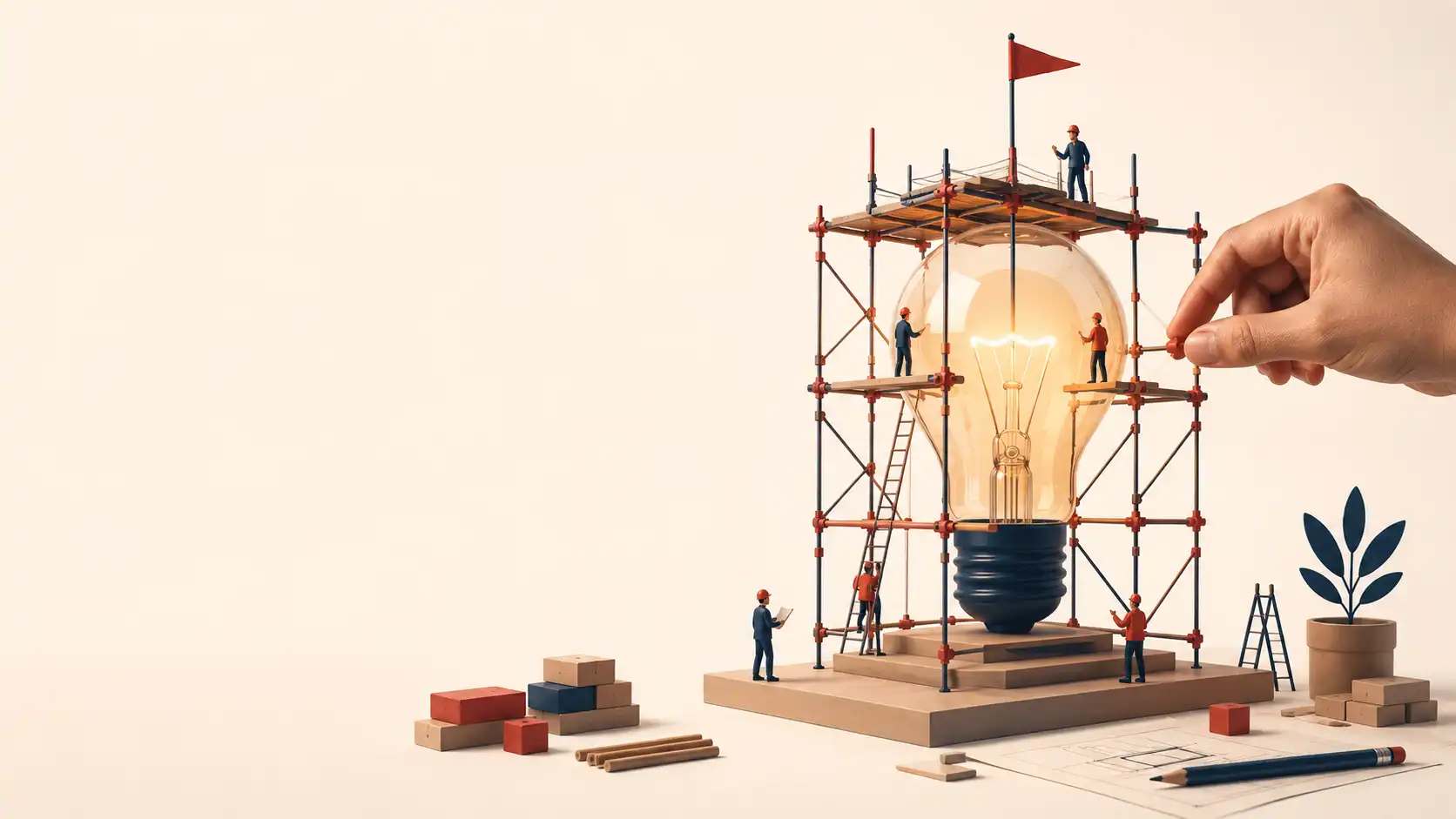
Project-based learning fails for one reason. Here’s the fix.

Everyone loves project-based learning. Until they try it. Walk into almost any forward-thinking school or college today and someone will tell you, proudly, that they “do project-based learning.” It is one of the most agreed-upon good ideas in modern education. Students learn by building real things, solving real problems, working like adults actually work. Who could argue with that? And yet, if you watch closely, a large share of project-based learning quietly does not work. The projects get made. Photos get taken. But the deep learning everyone promised somehow does not show up. Students produce something that looks impressive and walk away having learned surprisingly little. For years, people blamed the wrong things. The students were not motivated enough. The projects were not exciting enough. The teacher needed more training, more time, more resources. But the real reason project-based learning fails is more specific than any of those, and once you see it, you cannot unsee it. The one reason it fails Here it is, plainly. Project-based learning fails when the project replaces the teaching instead of carrying it. In a failed PBL classroom, the logic goes like this: “If students are doing a project, they must be learning, so my job is mostly to step back and let them discover.” The teacher hands out an exciting brief, provides some materials, and then retreats, trusting the project itself to do the teaching. It almost never does. What actually happens is that students, left to figure out everything at once, default to what they already know. They divide the work so the confident kids do the hard parts and the rest coast. They reach for the first idea rather than the best one. They produce something that looks like learning, a working model, a slide deck, a video, while the actual concepts the project was meant to teach slip past untouched. The artifact gets built. The understanding does not. This is not a small failure mode. It is the dominant one. Why “just let them discover” doesn’t work There is a comfortable belief in education that children learn best when left to explore freely, with minimal instruction. It feels right. It fits our romantic picture of the curious child inventing the world for themselves. The research is not kind to it. One of the most cited papers in the field, by Paul Kirschner, John Sweller and Richard Clark, reviewed decades of evidence and concluded bluntly that minimally guided instruction does not work well, especially for learners who are still novices in a subject (their 2006 paper is here). The reason is about how memory works. A beginner’s working memory is easily overloaded. Drop them into a complex open project with no structure and most of their mental effort goes into just coping with the chaos, leaving little capacity left for the actual concept you wanted them to grasp. This does not mean projects are bad. It means projects without structure are bad. And those are very different claims. The fix: scaffolding, not stepping back The fix is a single shift in how the teacher sees their role. In failed PBL, the teacher steps back and lets the project teach. In effective PBL, the teacher stays fully present and scaffolds the project, building temporary supports that hold the student up until they can stand on their own. Scaffolding is exactly what it sounds like. When you construct a building, you put up scaffolding to support the structure while it is being built, then remove it once the building can stand. Good teaching does the same with understanding. You provide structure early, when the student is fragile in the concept, and you withdraw it gradually as they grow stronger. In a project, scaffolding looks like this: This is the difference between a project that teaches and a project that merely happens. Why this connects to everything else There is a deeper point here, and it links directly to something we have written about before: that creativity is a skill, not an inborn talent. The same logic applies. We do not expect students to become creative by simply being told “be creative.” We do not expect them to learn through projects by simply being handed a project. In both cases, the magic word is taught. The skill has to be built, deliberately, with structure, by a teacher who stays in the room. The research backs the upside, too. When project-based learning is done well, with proper scaffolding, the results are strong. Large studies, including recent work summarised by PBLWorks and the Lucas Education Research foundation, show meaningful gains in understanding and engagement, across different subjects and student backgrounds. The method is not the problem. The unsupported version of the method is. The one thing to remember If your school or college “does project-based learning” and it is not producing the depth you hoped for, do not abandon the projects. Look instead at one thing: is the teacher stepping back, or scaffolding? A project is not a substitute for teaching. It is a vehicle for it. The teacher who understands that difference can make project-based learning extraordinary. The teacher who does not will keep producing impressive-looking artifacts and wondering why the learning never seems to stick. The projects were never the point. The scaffolding around them always was.

Project-based learning fails for one reason. Here’s the fix. Read Post »

Creativity Is a Skill, Not a Talent. The Research Proves It.

“I’m just not a creative person” Almost everyone has said this, or heard it said. Usually with a small shrug, as if reporting a fact about themselves, like height or eye colour. I’m just not creative. It is one of the most widely believed ideas about the human mind. And it is wrong. Not “wrong” in a feel-good, everyone-is-special way. Wrong in a measurable, studied, replicated-in-the-research way. Creativity is not a gift handed to a lucky few at birth. It is a set of mental habits that can be taught, practised, and improved, the same way you can improve at chess, or cooking, or writing. Decades of research point in the same direction, and most schools are still teaching as if the opposite were true. Let us walk through what we actually know. Where the myth came from The belief that creativity is an inborn trait is old, and it comes from a reasonable place. We see a finished painting, a brilliant product, a beautiful piece of music, and we cannot see the years of failed attempts behind it. So we assume the creator was simply born able to do that. The struggle is invisible. The talent looks like magic. This is the same illusion that makes us think great athletes are “naturals.” We see the final performance, never the ten thousand boring hours of practice. With creativity, the practice is even more hidden, because it happens inside someone’s head. What the research actually found Here is where it gets interesting. When psychologists started actually studying creativity, rather than just admiring it, the inborn-talent story fell apart. In the 1950s and 60s, a researcher named E. Paul Torrance ran long-term studies measuring creative thinking in school children. He did not find a small group of “creative kids” and a large group of “non-creative” ones. He found that creative thinking could be measured, that it varied across all children, and crucially, that it could be developed through the right kind of teaching. His tests are still used today. Around the same time, the psychologist J.P. Guilford broke “creativity” down into specific mental operations, things like divergent thinking, the ability to generate many possible answers to an open question, rather than one correct answer. The important word is operations. These are things the mind does, not things the mind is. And anything the mind does can be practised. More recently, researchers have shown that creativity follows the same rules as other complex skills. It improves with deliberate practice. It improves with good feedback. It improves when you learn the techniques experts use. It is domain-specific, meaning you build it in a field by working in that field, not by sitting through a generic “creativity workshop.” None of this is how a fixed, inborn trait behaves. All of it is how a skill behaves. The four kinds of creativity One of the most useful ideas from modern research is that creativity is not one single thing. Researchers James Kaufman and Ronald Beghetto described four levels of it, and once you see them, the “I’m not creative” myth becomes almost impossible to hold. Almost everyone who says “I’m not creative” is comparing themselves to Big-C and concluding they have none. But creativity lives on a staircase, and everyone is already standing on it. The job of education is not to find the rare Big-C genius. It is to help every student climb from mini-c upward. Why this matters more now than ever For most of history, you could argue about this idea without much at stake. That has changed. We now share the world with machines that are very good at producing correct answers. An AI can recall, summarize, and follow instructions faster than any human. What it does less well, and what humans still do best, is the genuinely creative act: asking a question nobody set, connecting two unrelated things, deciding what is worth making in the first place. Which means the one capability schools have long treated as optional, a nice extra for the “artistic” kids, is now the central thing. If creativity were truly an inborn gift, this would be terrible news, because most students would be locked out of the most valuable skill of their lifetime. But it is not a gift. It is a skill. And that changes everything about what a school is for. So how do you actually build it? If creativity is a skill, it has techniques, the same way writing or coding does. Here are the ones the research supports most strongly, written so you can use them tomorrow. This is the part worth saving. Notice that not one of these requires you to have been “born creative.” Every one of them is a practice. Which is the entire point. The one thing to remember If you teach, or you are raising a child, or you have ever quietly believed you are “just not a creative person,” remember this. Creativity is not the lightning that strikes a chosen few. It is a muscle, built by anyone willing to do the reps. The students who look “naturally creative” are almost always the ones who were given permission to try, fail, and try again, more often than the rest. That permission is something a good classroom can give every single child. Nobody is born uncreative. Some of us were just never taught the moves.

Creativity Is a Skill, Not a Talent. The Research Proves It. Read Post »

0
    0
    Your Cart
    Your cart is emptyReturn to Shop
    Scroll to Top