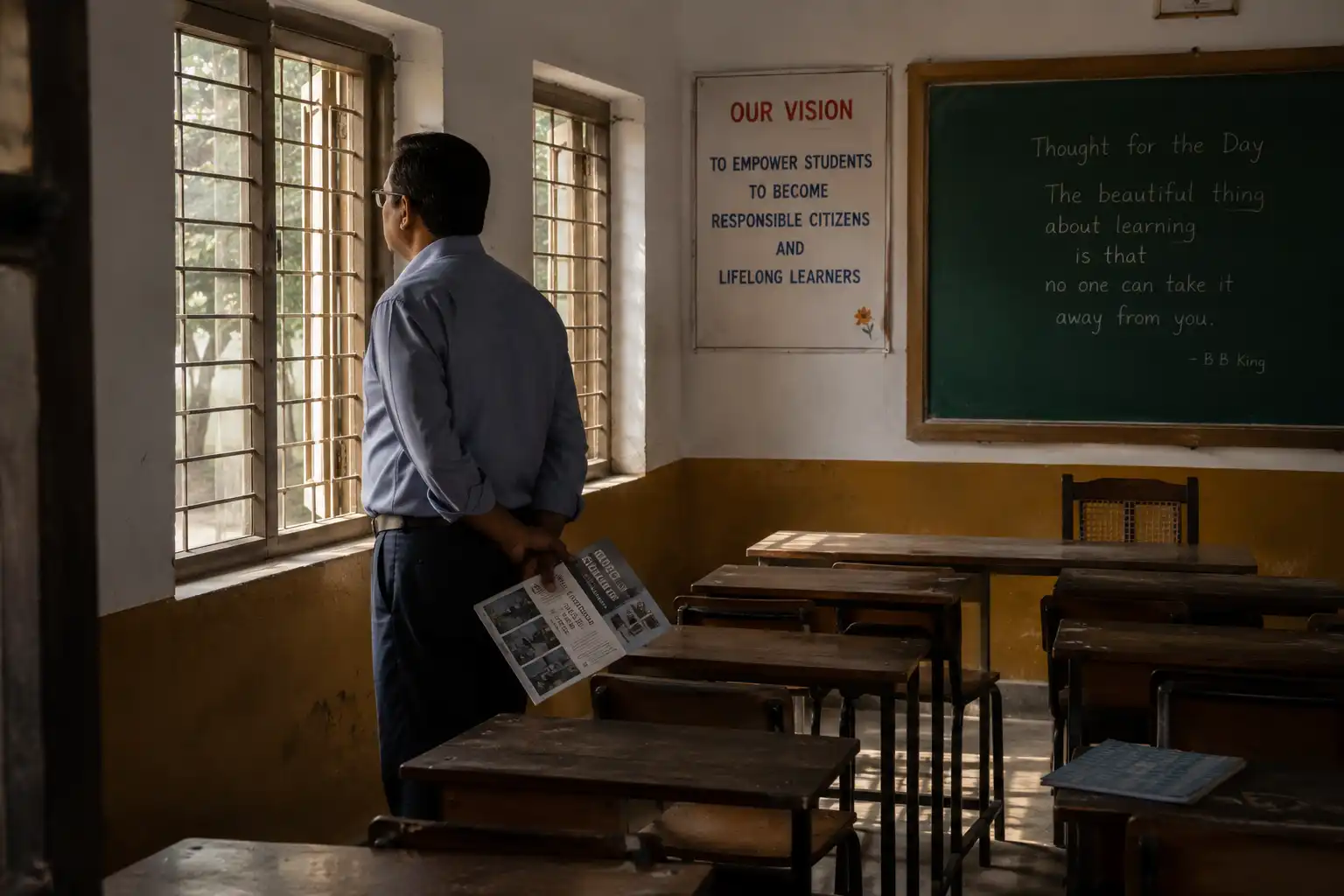
Every school has this room
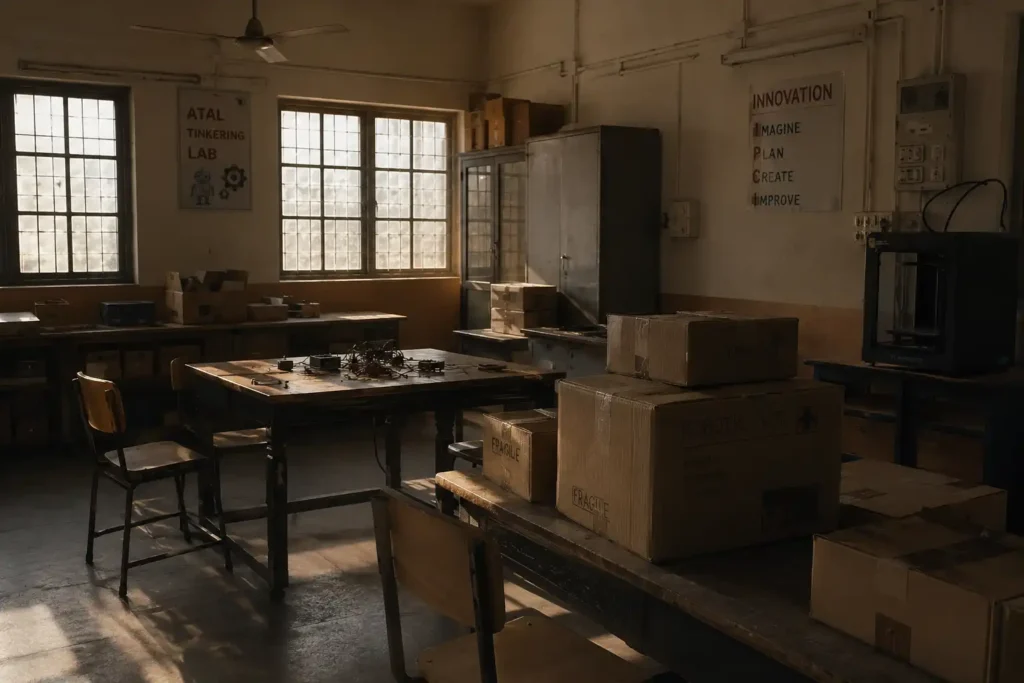
Walk into almost any school that bought an innovation lab three years ago and you will find the same room.
The sign on the door still looks good. Inside, there are boxes. Some of the kits are half-built. Some are still wrapped in plastic. There is usually a 3D printer in the corner, switched off, because the one teacher who knew how to use it left, and nobody else was ever really taught.
You know this room. A lot of you have one. You spent three, four, maybe seven lakhs on it. And by the second year, it was mostly locked.
I have helped set up labs like this for eight years. So when I say the room goes quiet, I am not guessing. I have watched it happen in school after school, and for a long time I was part of the problem.
I spent years blaming the wrong things
For a long time I blamed what everyone blames. Wrong kit. Wrong vendor. Teachers who did not try hard enough.
Then I stopped believing that, because the pattern was too consistent to be anyone’s fault. It was happening everywhere, to good schools, with sincere teachers, who genuinely wanted it to work. When something fails that uniformly, the cause is not the people. It is the thing itself.
So the problem was not the kit. The problem was that a kit was the thing we bought at all.
What a kit actually is
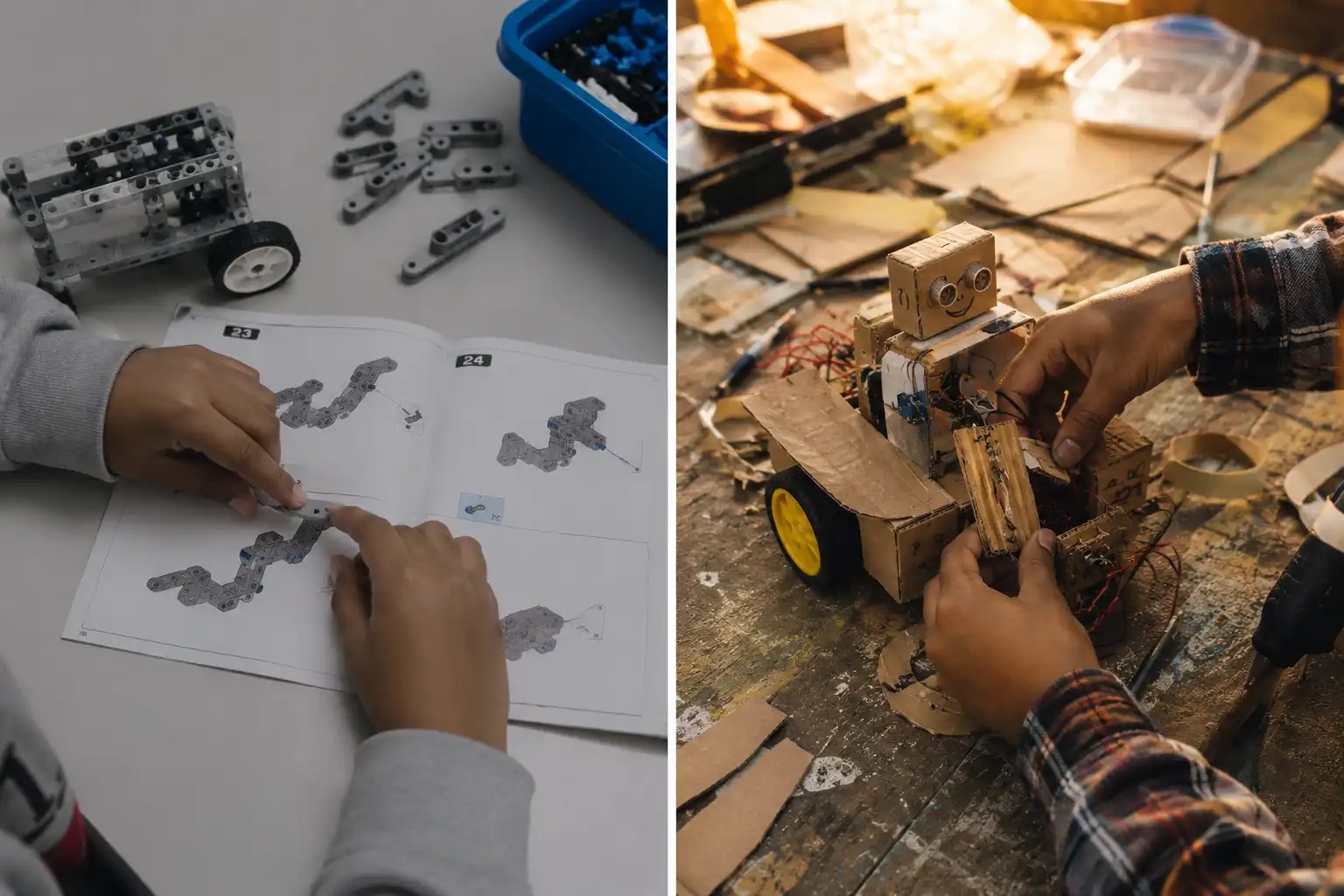
Think about what a kit really is. It comes with a manual. Step one, step two, all the way to step twenty. Build the robot. And when the student finishes step twenty, the robot works, and that is the end. There is nothing after step twenty.
The student followed instructions well. They did not make anything that was theirs. And following instructions, even with nice components, stops being interesting in about two weeks. That is not the child being lazy. That is just what happens when the ending is decided before the child even walks in.
There is a name for this in learning research. It is the difference between assembly and construction. Assembly is following someone else’s steps to someone else’s answer. Construction is building something nobody handed you a manual for. Only one of them builds the kind of thinking the world actually pays for later. Kits are very good at assembly. They are almost useless at construction.
What the 2027 mandate actually asks for
Here is the part most schools have not slowed down to read properly. The CBSE Composite Skill Lab mandate, the one every school is scrambling for before 2027, does not ask for a kit. It asks for something a kit cannot give.
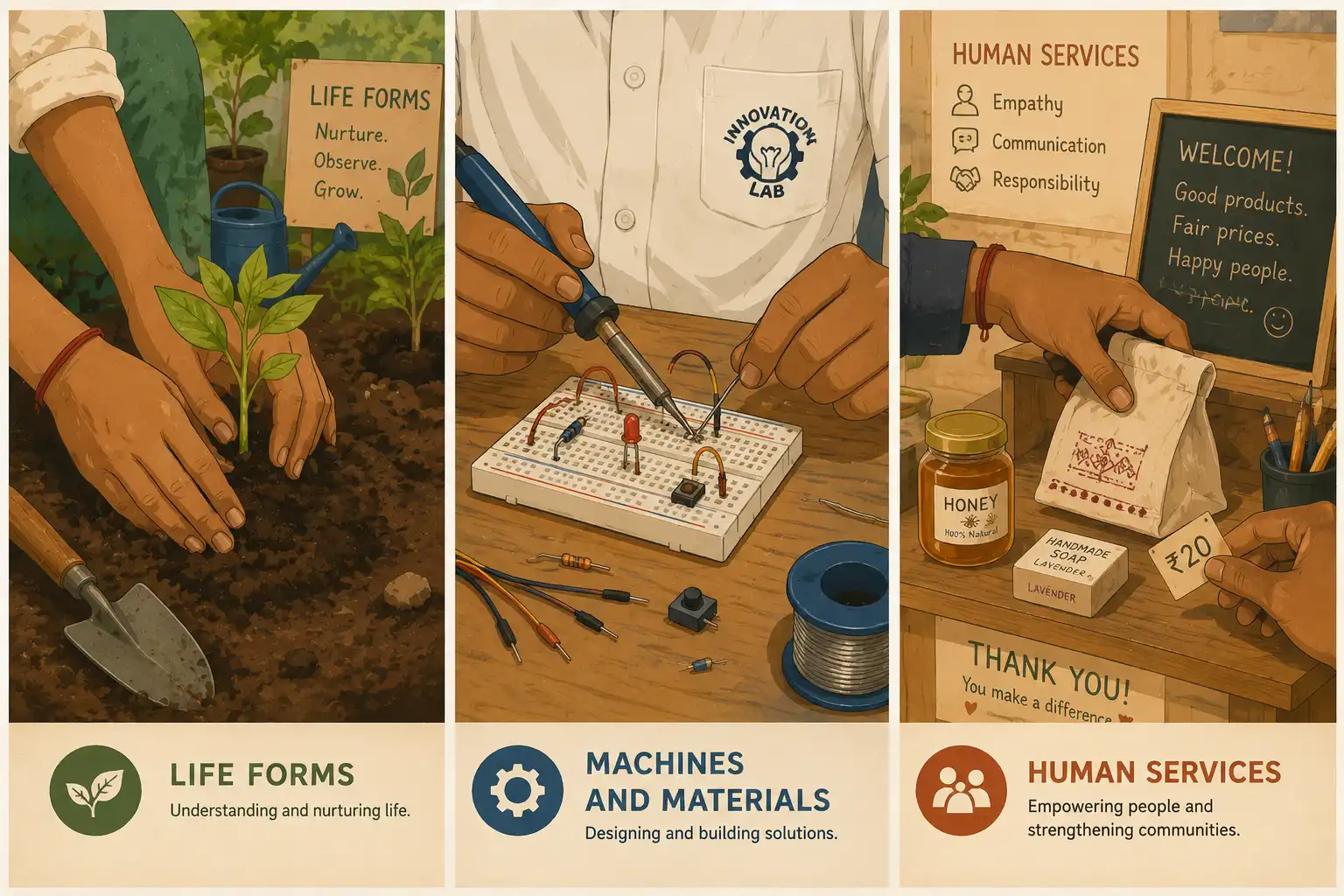
It asks for skill education across three forms of work. Working with life forms, which means agriculture, food, growing things. Working with machines and materials, which means electronics, fabrication, building things. And working in human services, which means health, retail, hospitality, serving people. Three different worlds of work, and students are meant to do real projects in each.
It asks for 110 hours a year, for every student from Class 6 to Class 10. Not a one-week workshop. A sustained, year-long habit.
Read it honestly and the mandate is not describing a robotics lab at all. It is describing a workshop where children make real things across real domains. A robotics kit answers maybe one third of what the mandate is asking, and even that third, it answers badly. The mandate, quietly, is telling schools the same thing those locked rooms have been telling them for years. The kit was never the point.
The part that costs me money to say
The best lab is also the cheapest one to run.

A vegetable patch costs less than a robotics kit and teaches a child more, because the plant actually dies if they get it wrong, and nothing in a kit ever has stakes like that. A 3D printer can print the same plastic parts that companies sell you inside expensive boxes, which turns a recurring five-lakh-a-year buying habit into a few thousand rupees of filament. A box of components from the local electronics market does what a branded “starter kit” does, at a fraction of the price, and the child learns where things actually come from.
I run a company that helps schools build these labs. Saying all of this out loud is not in my commercial interest, because the easiest thing for me to sell you is a kit with a margin built in. I am saying it anyway, because it is true, and because I am tired of watching schools spend the most to learn the least.
Before you sign anything for 2027
Sit with one question before the vendor quotes start arriving. Not which kit. Not which brand. Just this. What is this room actually for?
If the honest answer is “to pass the inspection,” you will be unlocking that door for visitors again by next winter, same as last time. If the answer is “so our students can make real things, across real kinds of work, for a whole year,” then you already know a kit will not get you there.
You will be surprised how little you actually need to buy. And how much of what you already have, the garden, the courtyard, the old computer lab, the scrap behind the workshop, is waiting to become the most alive room in the school.